Size Matters: The Goldilocks Principle
When it comes to raised bed dimensions, there's a sweet spot that makes gardening easier and more productive. Here's what experienced suburban gardeners have learned works best:
- Width: Keep it to 3 to 4 feet max. Any wider and gardeners find themselves doing garden yoga just to reach the center plants. Not fun!
- Length: Eight feet is the sweet spot for most backyards. It's long enough to grow a good variety but short enough to walk around easily.
- Depth by crop:
- Lettuce and herbs: 6 to 8 inches works perfectly
- Carrots and root veggies: Need at least 12 inches
- Tomatoes and deep rooters: Go for 18 to 24 inches for the best results
Material Showdown: Pros, Cons & Lifespans
Different materials offer different advantages. Here's what suburban gardeners should know about each option:
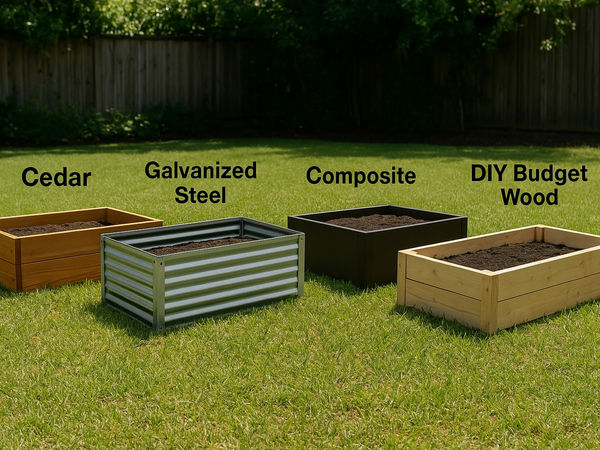
Cedar (10 to 15 years)
Cedar is the classic choice for a reason. It's beautiful, naturally rot resistant, and fits into any backyard aesthetic. The downside? It's pricey. But many gardeners feel the investment is worth it for the natural look and longevity.
Galvanized Steel (20+ years)
Steel beds are the modern choice. They're incredibly durable, have a sleek contemporary look, and last forever. The catch is they can heat up in direct sun, which might stress plants on really hot days. Many gardeners paint them lighter colors or ensure good soil moisture to manage this.
Composite (25+ years)
Composite materials offer the best of both worlds: they look like wood, require almost zero maintenance, and outlast everything else. They're the most expensive option upfront, but the lack of maintenance makes them attractive to busy suburban families.
Pressure Treated Wood (8 to 12 years)
For budget conscious gardeners, pressure treated lumber is the go to choice. Just make sure to use only ACQ treated wood (not older CCA treatments). It won't last as long as cedar, but it gets the job done at a fraction of the cost.
Assembly Reality Check
Let's be honest about what it takes to get these beds set up:
- Snap together kits: These can be assembled in about 20 minutes. Perfect for gardeners who aren't handy with tools.
- Full DIY builds: Expect to spend up to 3 hours, especially on the first one. Having a helper makes it way easier.
- Consider expansion: Many gardeners start with one bed and add more each year. Choose a system that makes expansion simple.
Location Tips
Where someone places their raised bed matters just as much as what it's made from:
- Sunlight: Most vegetables need 6 to 8 hours of direct sun. Watch the yard throughout the day before committing to a location.
- Drainage: Avoid low spots where water pools after rain. Raised beds drain well, but they're not magic.
- Access: Leave enough space around beds for wheelbarrows, hoses, and comfortable kneeling room.
- Future growth: Start with space to expand. Once neighbors see that first harvest, they'll want to add more beds too!
Cost Breakdown (4x8 bed)
Here's what suburban gardeners can expect to invest:
- DIY Cedar: $150 to $250
- Pre made Cedar Kit: $200 to $400
- Galvanized Steel: $300 to $500
- Composite: $400 to $600
A raised bed is an investment that pays for itself through bigger harvests and way less maintenance than traditional in ground gardens.
Red Flags to Avoid
Watch out for these common problems when shopping for raised beds:
- Beds under 6 inches deep (too shallow for most vegetables)
- Unknown wood sources (could contain harmful chemicals)
- No corner reinforcement (beds will bow out and fail quickly)
- Flimsy hardware (cheap brackets break within a season)
Bottom Line
The raised bed someone chooses sets the stage for years of gardening success. Whether it's budget friendly pressure treated wood or a premium composite system, picking the right one for their goals makes all the difference.
Once that bed is built and planted, gardeners can share their success on the MyHarvst app. It's the perfect place to post photos of those first harvests, connect with other local gardeners, and even trade or sell surplus produce with neighbors.
Garden with MyHarvst.
Download the MyHarvst app, share, sell or buy your community's growth for the season and connect with local gardeners and local farmers in your area.
Download MyHarvst